Reptile Belly Hard and Not Passing Stool? How to Check for Impaction
Impaction is a blockage of the gut caused by indigestible substrate (sand, gravel, etc.), feeders that are too large, or poor digestion from low enclosure temperature. Left untreated, it can require surgery — it's one of the most common reptile emergencies.
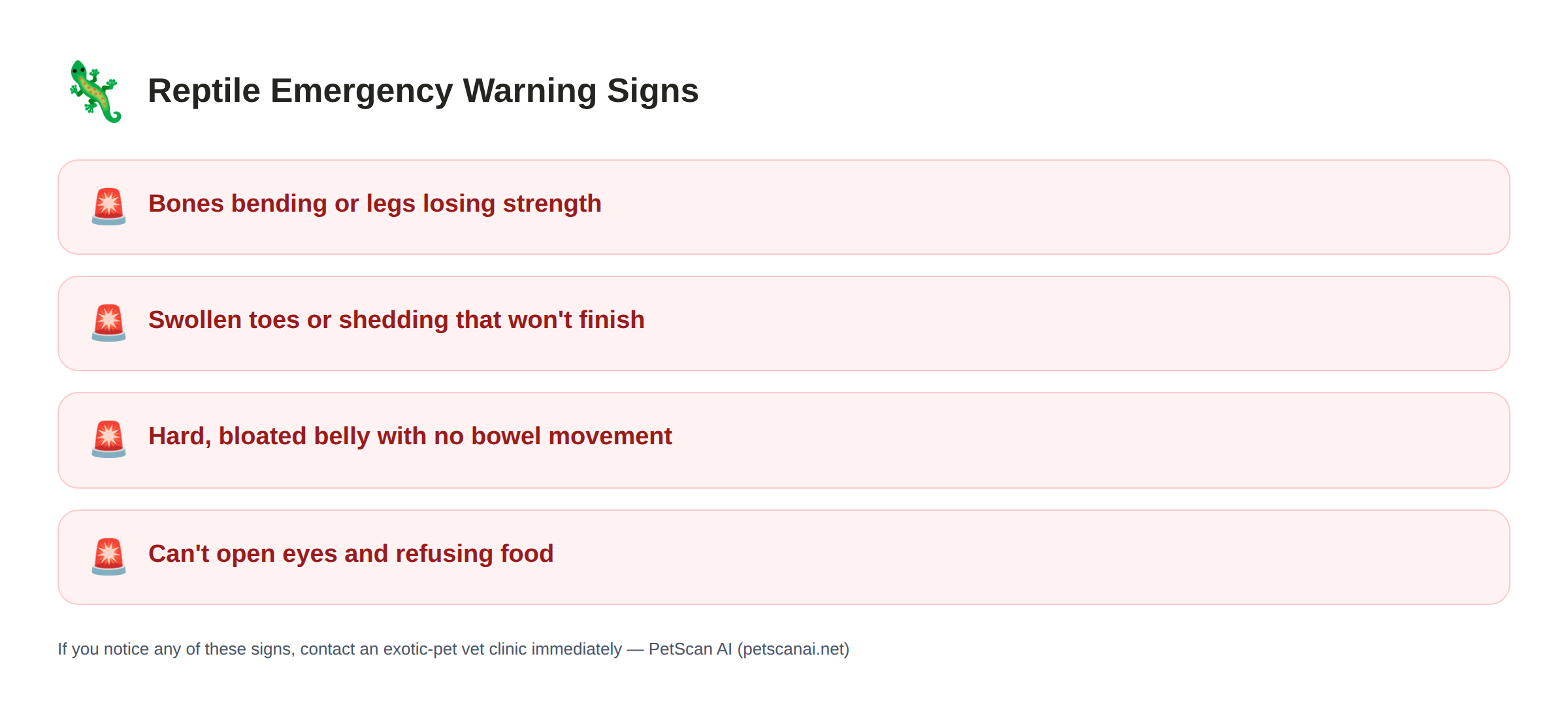
Why it happens
- Swallowing loose substrate like sand or pellets along with food
- Feeder size larger than the width of the animal's head
- Low enclosure temperature reducing digestive function
- Chronic dehydration causing gut contents to harden
What to check
- The belly feels harder and more swollen than usual
- No bowel movement for several days
- Loss of appetite and lethargy
- Straining in a defecation posture but nothing comes out
What you can check and do at home
- Warm-water soak: soaking in lukewarm water around 30°C can help encourage a bowel movement in mild cases.
- Swap the substrate right away: switch any substrate with an ingestion risk to something digestible or with no swallowing risk, like paper towel.
- Recheck enclosure temperature: confirm it hasn't drifted outside the proper range for the species.
When to see a vet
If a soak and temperature adjustment for a few days (2-3) still produce no bowel movement, or the belly stays hard, go to the vet right away. An X-ray is needed to confirm whether there's a blockage and where it is before proper treatment can happen.
🏥 Find a vet that treats exotic pets →
Frequently Asked Questions
My reptile's belly is hard and they haven't passed stool for days — is it okay to keep watching at home for a few more days?
If a warm-water soak and temperature adjustment for a few days (2-3) still produce no bowel movement, or the belly stays hard, go to the vet right away. Impaction is one of the most common reptile emergencies and can require surgery if left untreated — an X-ray is needed to confirm whether there's a blockage and where it is before proper treatment can happen.
Is there anything I can try at home first before going to the vet?
A warm-water soak around 30°C can help encourage a bowel movement in mild cases. At the same time, switch any substrate with an ingestion risk (sand, gravel, etc.) to something safe like paper towel right away, and check that the enclosure temperature hasn't drifted outside the proper range for the species. If a few days of this doesn't improve things, though, don't wait any longer — go to the vet.
Wondering how your pet is doing right now? Check in 3 seconds with a photo.
Free AI scan →Related guides
Bearded Dragon Not Eating and Black Beard: Causes and What to Do · Crested Gecko MBD: Causes and Calcium Care · Snake Shedding Problems: Causes and What to Do
← Back to scanner · Care Guides · About · FAQ
📄 Printable summary of this guide — Emergency checklist PDF

This guide is provided by PetScan AI (petscanai.net). Scan the QR code to check your pet with AI right away.