Toxic Plants and Foods for Exotic Pets: Species-by-Species Risk List and Emergency Care
Lists of foods to avoid are everywhere for dogs and cats, but it's much harder to find reliable information for exotic pets — rabbits, reptiles, birds, amphibians — whose toxic reactions vary widely from species to species. This page summarizes representative dangerous plants and foods by species, based on veterinary sources including the ASPCA, the Merck Veterinary Manual, the House Rabbit Society, and the Association of Avian Veterinarians (AAV). If your pet has already eaten something and is showing symptoms, contact a vet right away instead of reading this page.
Shared risk mechanisms worth knowing upfront
Onion and garlic (Allium species) can cause oxidative damage to red blood cells and hemolytic anemia across virtually every species (garlic is 3-5x more potent than onion by weight). Avocado (persin) is especially high-risk for birds (budgerigars, canaries, etc.) and rabbits, while evidence for reptiles and amphibians is comparatively thin — that means "less studied," not "safe," so it's safest not to feed it to either group.
🐰 Rabbits
| Plant | Why it's dangerous |
|---|---|
| Lily of the valley, foxglove, oleander | Cardiac glycosides — arrhythmia, an emergency-level risk that can lead to sudden death |
| Poison hemlock | Causes rapid nerve and respiratory-muscle paralysis — among the most dangerous plants on this list |
| Daffodil, tulip, hyacinth bulbs | Alkaloids — symptoms are worse if the bulb itself is eaten |
| Rhubarb leaves (not the stalks) | Oxalic acid — GI irritation, lowers blood calcium |
| Green parts of potato, tomato leaves | Solanine — ripe tomato fruit and peeled potato are not a concern |
| Food | Why it's dangerous |
|---|---|
| Avocado | Persin — difficulty breathing, heart failure; rabbits are notably sensitive |
| Chocolate, caffeine | Theobromine and caffeine — tremors, seizures, arrhythmia |
| Onion, garlic, chives | See the shared mechanism above; symptoms tend to worsen 24-72 hours after ingestion |
| Bread, crackers, and other high-carb snacks | Not an acute toxin, but disrupts cecal fermentation — a common cause of GI stasis |
As herbivores, rabbits are actually more likely to run into dietary mistakes (a sudden overload of carbs or sugar) that lead to GI stasis than to acute plant poisoning.
🦎 Reptiles (lizards, turtles, tortoises)
| Plant | Why it's dangerous |
|---|---|
| Oleander | Cardiac glycosides — the entire plant is toxic, even the smoke from burning it |
| Azalea, rhododendron | Grayanotoxins — neurological and GI symptoms |
| Buttercup | Protoanemonin — oral irritation; documented tortoise deaths |
| Daffodil, foxglove | Alkaloids and cardiac glycosides — documented tortoise deaths |
| Food | Why it's dangerous |
|---|---|
| Fireflies | Lucibufagins (cardiac-glycoside-like compounds) — there are documented cases of bearded dragons dying within an hour of eating just half a firefly. Not well known here, but in practice one of the most lethal feeding accidents |
| Onion, garlic | See the shared mechanism above |
| Rhubarb | Very high oxalic acid content — safest not to feed at all |
| Feeding spinach repeatedly as a staple | Not an acute toxin from a single feeding, but the oxalates bind calcium and raise the chronic risk of metabolic bone disease (MBD) — think "shouldn't be a staple food," not "poison" |
🦜 Birds (parrots, etc.)
| Plant | Why it's dangerous |
|---|---|
| Avocado (leaves and pit especially dangerous) | Persin — breathing difficulty about 12 hours after ingestion, possible death within 1-2 days. Small birds like budgerigars and canaries are especially vulnerable (chickens and turkeys are comparatively resistant) |
| Dieffenbachia, philodendron | Insoluble calcium oxalate crystals — mouth pain, rarely breathing difficulty |
| Lily of the valley, oleander, yew | Cardiac glycosides and taxine alkaloids — arrhythmia |
| Rhubarb leaves | Oxalic acid — clinical reports suggest even small amounts can be risky |
| Food | Why it's dangerous |
|---|---|
| Avocado | See the table above |
| Chocolate, caffeine | Methylxanthines — overexcitement, rapid heart rate, tremors, seizures |
| Salty human snacks (chips, crackers, etc.) | Birds are notably sensitive to sodium relative to body weight — vomiting, tremors, and seizures have been reported within 3 hours, making this a genuinely serious risk |
| Apple, cherry, and peach seeds/pits | Amygdalin (a cyanogenic glycoside) — risky if chewed and eaten in quantity |
🐹 Hamsters and Rodents / 🦔 Hedgehogs
| Plant | Why it's dangerous |
|---|---|
| Lily of the valley, oleander, foxglove | Cardiac glycosides — same mechanism as in other species |
| Dieffenbachia, philodendron, pothos | Calcium oxalate crystals — mouth and GI irritation |
| Daffodil, tulip bulbs | Alkaloid irritation — exposure risk is especially high because these animals dig and chew |
| Food | Why it's dangerous |
|---|---|
| Onion, garlic, chives | See the shared mechanism above; powdered form is more dangerous than fresh |
| Avocado | Persin — GI symptoms; severe cases have reported breathing difficulty and cardiac arrest |
| Chocolate, caffeine | Methylxanthines |
| Bitter almonds, unripe apricot/cherry/peach pits | Amygdalin — ordinary sweet almonds sold in stores are not included, a common point of confusion |
| Undercooked kidney beans and other raw legumes | Phytohaemagglutinin (a lectin) — destroyed by thorough cooking |
⚠ Correcting a common myth
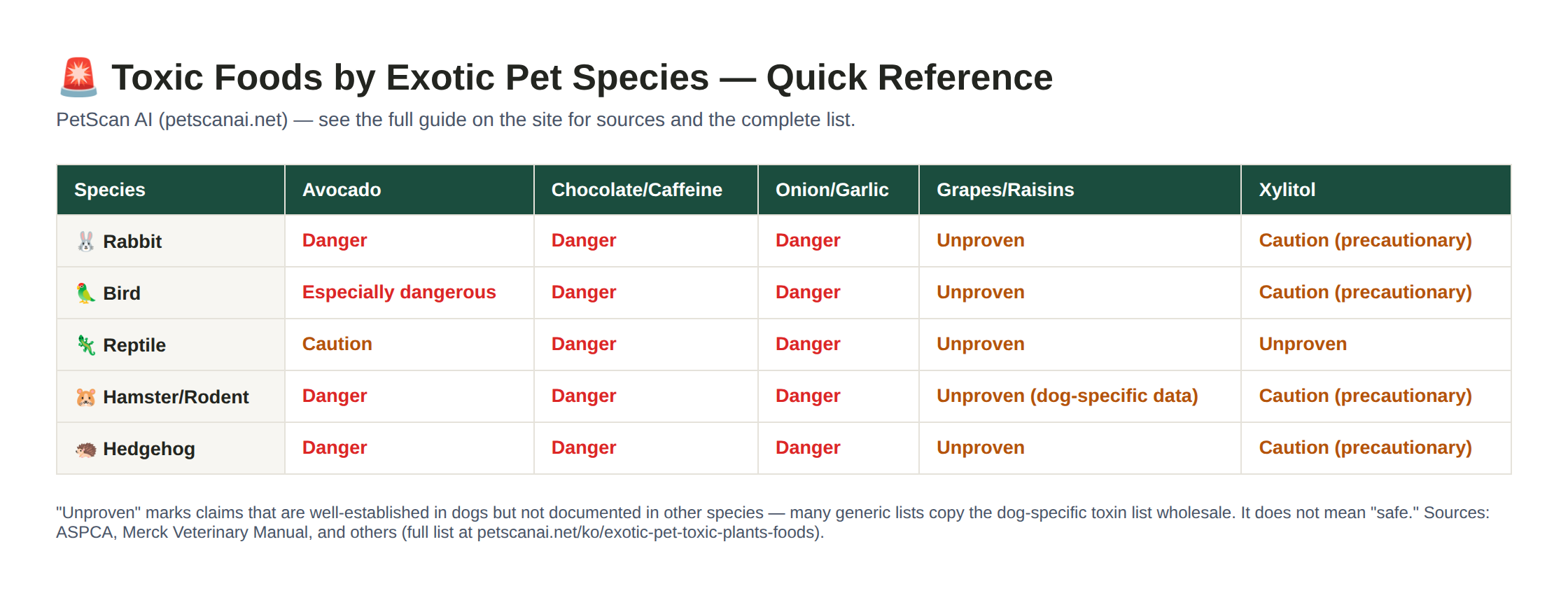
Grapes and raisins have an academically established link to kidney failure only in dogs. Cats and ferrets have only anecdotal case reports, and there's no published evidence at all yet for rabbits, hamsters, or other small mammals. Many "toxic foods for exotic pets" lists simply copy the dog list wholesale — this page labels that connection as "unproven," not as an established toxin. That doesn't mean it's safe; it's still safest not to feed it.
Xylitol is similar — the hypoglycemia mechanism established in dogs is often extended to birds and small mammals as a precaution. Evidence is especially sparse for reptiles and amphibians.
🐸 Amphibians (frogs, salamanders) — What touches their skin can matter more than what they eat
Amphibians have thin, highly permeable skin, so accidents where chemical residue on hands or in water gets absorbed through the skin are actually more common and more dangerous than anything they eat.
| Contact hazard | Why it's dangerous |
|---|---|
| Soap, hand lotion, hand sanitizer residue | Residue can be absorbed through the skin even after what feels like a thorough hand wash — the single most commonly cited precaution around handling amphibians |
| Chlorinated tap water | Using it directly without dechlorinating leads to absorption through skin and gills |
| Disinfectants (iodine, chlorine-based, alcohol, etc.) | Rinse enclosures thoroughly after cleaning so no residue remains |
| Wild feeder insects from pesticide/herbicide-treated areas | Indirect exposure through prey — safest to avoid wild-caught insects of unknown origin |
| Fireflies | Same lucibufagin compounds as the reptile hazard above — usually spit right back out if swallowed, but can be cardiotoxic if absorbed |
Suspected Poisoning: 4 Emergency Steps
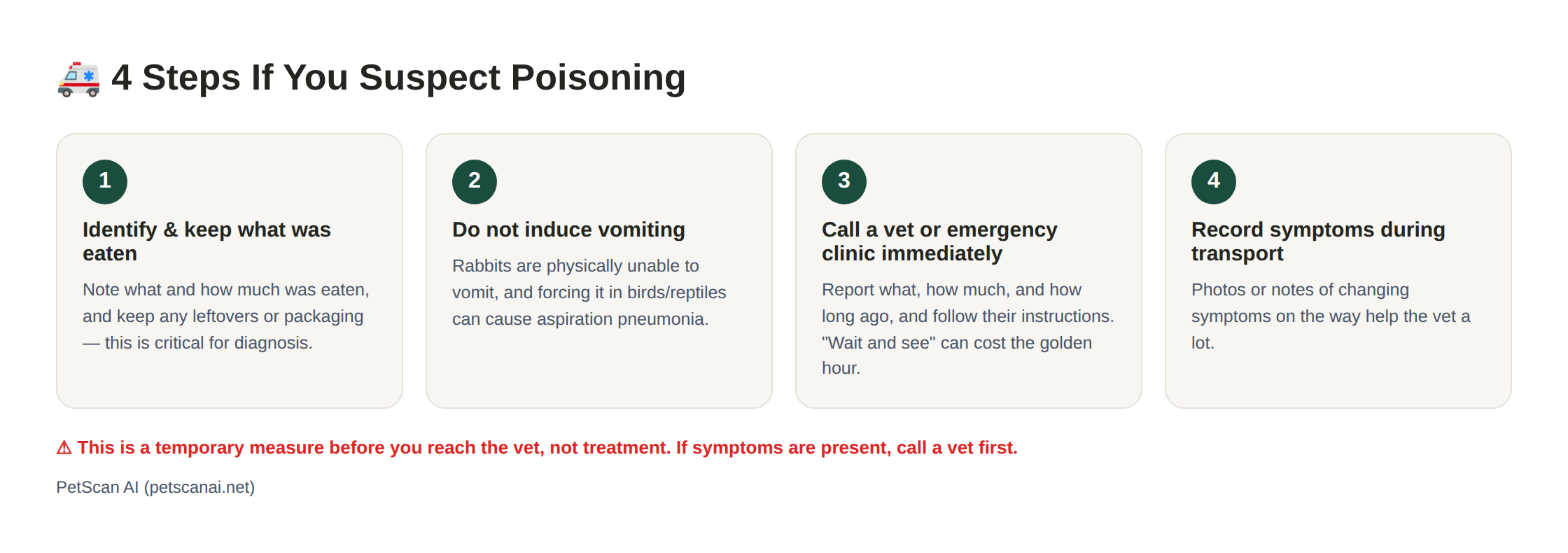
- Identify and save what was eaten: note what and how much they ate, and keep any leftovers or packaging as-is. This can be critical information for the vet's diagnosis.
- Don't force vomiting: rabbits are physically unable to vomit at all, and attempting it incorrectly in birds or reptiles can make things worse, including aspiration pneumonia.
- Call the vet (emergency clinic) immediately: tell them what was eaten, how much, and how much time has passed, then follow their instructions. "Let's just watch and see how they are tomorrow" can be a dangerous choice. Not sure who to call? See poison control hotlines and emergency vet contacts by country.
- Record their condition during transport: photos or notes of any changes in symptoms can help with diagnosis. See the vet transport guide for how to move them safely.
Species Risk at a Glance
When to See a Vet
If you know or suspect your pet ate a toxic plant or food, contact a vet first even if there are no symptoms yet. Depending on the species, symptoms often don't appear for hours — "they look fine, let's just watch" is the most common mistake that costs the window for treatment.
Wondering how your pet is doing right now? Check in 3 seconds with a photo.
Free AI scan →Related guides
Rabbit GI Stasis: Emergency Care · Hamster Cheek Pouch Swollen on One Side or Won't Go Down: Causes · Transporting a Sick Exotic Pet to the Vet: Carrier Setup and Keeping Them Warm · Frog and Salamander Red Spots or Skin Peeling: Red-Leg Disease Warning Signs
← Back to scanner · Care Guides · About · FAQ
📄 Printable summary of this guide — Emergency checklist PDF

This guide is provided by PetScan AI (petscanai.net). Scan the QR code to check your pet with AI right away.