Rabbit Not Pooping or Eating? GI Stasis Emergency Care
As herbivores, rabbits are built so their gut needs to keep moving nonstop, all day. When stress, pain, dehydration, insufficient fiber, or similar factors cause gut motility to slow down or stop, it's called GI stasis (gastrointestinal stasis) — a leading rabbit emergency that can deteriorate sharply within a few hours to half a day.
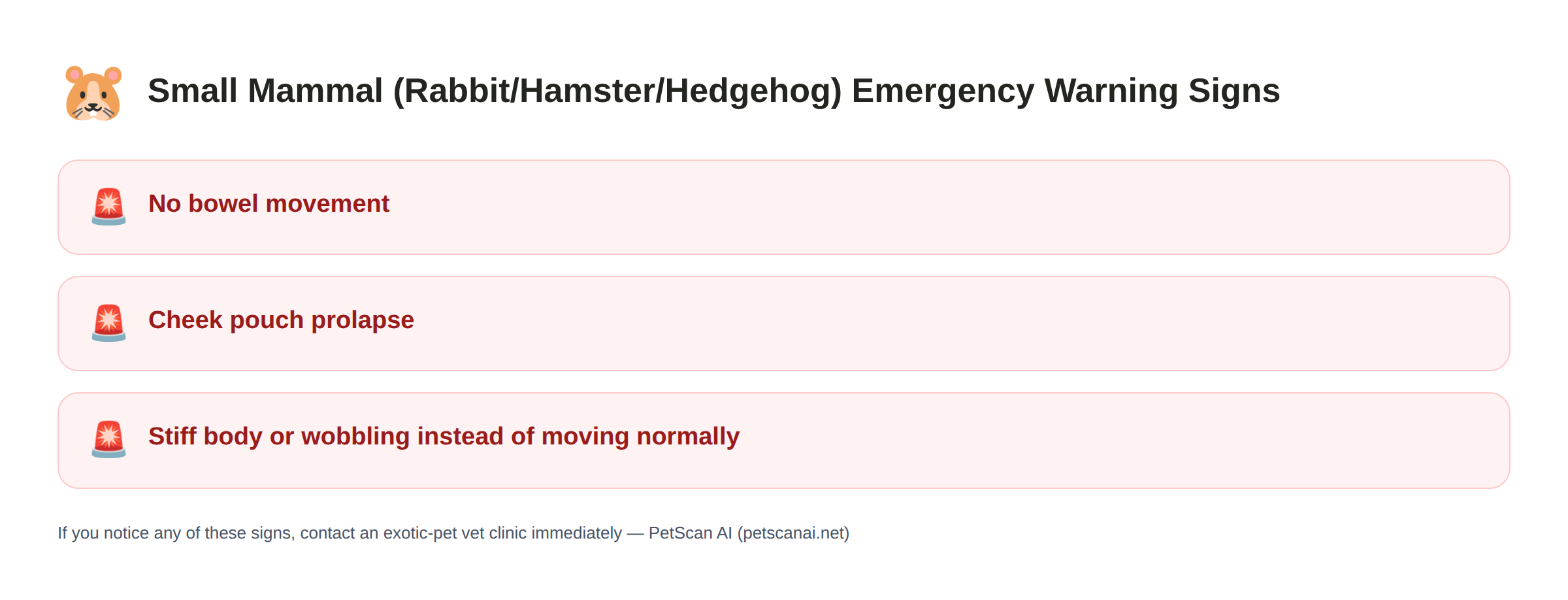
Why it's dangerous
Once gut motility stops, gas builds up inside and bacteria multiply abnormally. The pain makes them eat even less, and eating less slows the gut down even further, which easily spirals into a vicious cycle. Left untreated, it can progress to sepsis or liver dysfunction — this leaves far less time to act than emergencies in most other species.
What to check
- When they last had a bowel movement, and whether the droppings are smaller than usual or absent entirely
- Whether they're just mouthing hay/pellets without eating, or showing no interest at all
- Whether the belly feels hard or gassy when gently touched
- Teeth grinding (a pain signal), or a hunched, unmoving posture
What you can do at home before calling the vet
The following are temporary measures while you prepare to get to the vet, not treatment. Once you notice symptoms, call the vet first.
- Keep fresh hay and water nearby at all times: don't force-feed — watch whether they're able to eat on their own.
- Gently massage the belly in a circular motion: don't press hard, use a very light touch, and stop right away if they dislike it.
- Encourage light activity: letting them move on their own in a safe space can help gut motility.
When to see a vet
If there's no bowel movement or no eating at all for 6-8 hours or more, call the vet right away. Rabbits aren't an animal where "let's wait and see, go tomorrow" works. Confirming in advance that a vet actually treats rabbits can save valuable time.
🏥 Find a vet that treats exotic pets →
Frequently Asked Questions
My rabbit isn't eating or pooping — is it okay to wait and watch a bit longer?
No. If there's no bowel movement or no eating at all for 6-8 hours or more, call the vet right away. GI stasis is a leading rabbit emergency that can deteriorate sharply within a few hours to half a day — rabbits aren't an animal where "let's wait and see, go tomorrow" works.
Is there anything I can do at home before getting to the vet?
Keeping fresh hay and water nearby and watching whether they can eat on their own, gently massaging the belly in a circular motion, and encouraging light activity in a safe space can serve as temporary measures while you prepare to get to the vet. These aren't treatment, though — once you notice symptoms, call the vet first rather than trying these before anything else.
Wondering how your pet is doing right now? Check in 3 seconds with a photo.
Free AI scan →Related guides
Hamster Cheek Pouch Swollen on One Side or Won't Go Down: Causes · Rabbit, Guinea Pig, and Chinchilla Drooling or Not Eating: Dental Malocclusion (Overgrown Teeth) Causes and When to See a Vet · Transporting a Sick Exotic Pet to the Vet: Carrier Setup and Keeping Them Warm
← Back to scanner · Care Guides · About · FAQ
📄 Printable summary of this guide — Emergency checklist PDF

This guide is provided by PetScan AI (petscanai.net). Scan the QR code to check your pet with AI right away.