New Parrot Care Guide: The First Few Weeks
A newly adopted parrot is dealing with a completely new environment, which makes the first 1-2 weeks the most sensitive period. It's easy to get confused about what counts as normal versus a warning sign during this time, so it helps to know ahead of time.
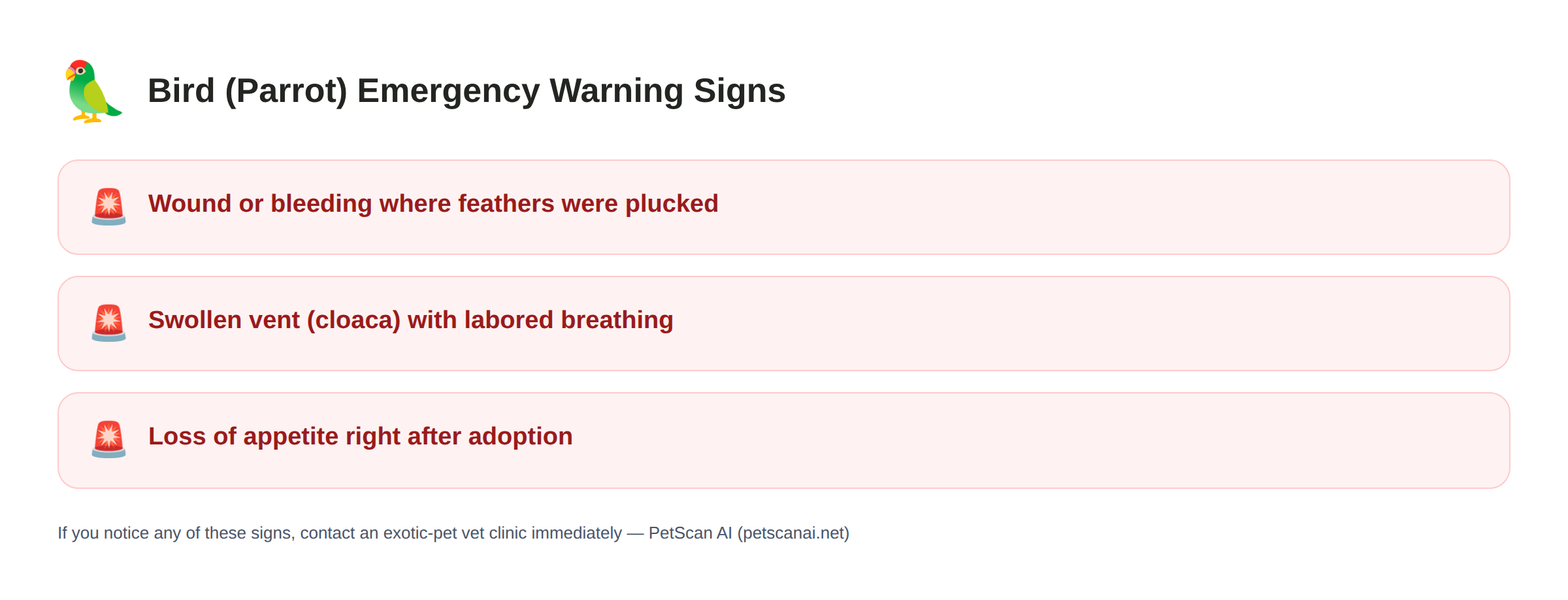
The first few days — these are normal
- Hunkering down in a corner of the cage, wary of people
- Eating less than usual (though if this continues for several days, see "What to check" below)
- Puffing up feathers and staying quiet (resting/on alert)
What to check during the settling-in period
- Check food and droppings: check daily whether the food dish level is dropping and whether droppings are appearing. Eating almost nothing for 3+ days is a warning sign.
- Breathing and posture: pumping the tail up and down while breathing, or keeping the eyes shut, are warning signs.
- Keep the environment quiet: avoid excessive attention (frequent handling, loud noise) for the first few days, and don't move the cage's location often.
When to see a vet
Right after purchase or adoption, quarantine status is often unknown, so a basic health checkup at an exotic (bird) vet within the first few days is recommended. In particular, if loss of appetite lasts more than 3 days or breathing looks abnormal, go right away.
🏥 Find a vet that treats exotic pets →
Frequently Asked Questions
My newly adopted parrot isn't eating well — could that just be the adjustment period?
Right after purchase or adoption, quarantine status is often unknown, so a basic health checkup at an exotic (bird) vet within the first few days is recommended. In particular, if loss of appetite lasts more than 3 days or breathing looks abnormal, go right away.
What should I check daily at home during the settling-in period?
Check daily whether the food dish level is dropping and whether droppings are appearing (eating almost nothing for 3+ days is a warning sign), and watch for pumping the tail up and down while breathing or keeping the eyes shut. For the first few days, avoid excessive attention (frequent handling, loud noise) and don't move the cage's location often.
Wondering how your pet is doing right now? Check in 3 seconds with a photo.
Free AI scan →Related guides
Parrot Feather Plucking and Bald Patches: Causes and What to Do · Parrot Egg Binding: Symptoms and Emergency Care
← Back to scanner · Care Guides · About · FAQ
📄 Printable summary of this guide — Emergency checklist PDF

This guide is provided by PetScan AI (petscanai.net). Scan the QR code to check your pet with AI right away.