Why Hedgehogs Won't Uncurl — Normal Defence vs. Warning Signs
Curling into a ball is a hedgehog's natural, built-in defence behaviour. But if they stay curled up without uncurling longer than usual, or keep hunkering down even when you haven't touched them, it could be a sign of pain or illness.
Normal situations
- Curling up momentarily when startled by an unfamiliar person, sound, or smell — they uncurl on their own after a bit.
- Curling up defensively more often while adjusting to a new environment (early after adoption).
- Curling briefly on alert right after waking up.
Situations that could be a warning sign
- Staying curled up even without being touched: they may be avoiding movement because of pain.
- Strongly resisting or vocalizing when you try to uncurl them: this can suggest pain in a specific area.
- Activity and appetite have both dropped along with it: this suggests a general decline in condition rather than simple wariness.
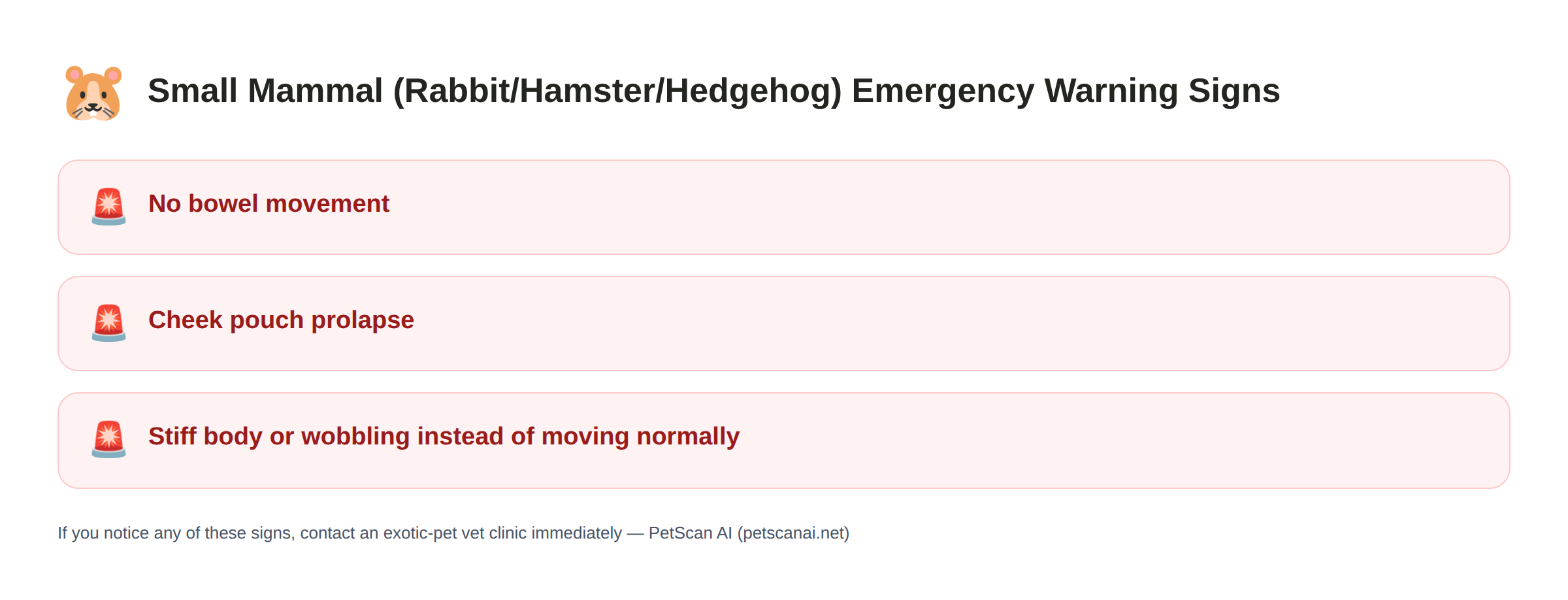
- Wobbling or falling to one side (suspected Wobbly Hedgehog Syndrome): this can suggest a neurological condition and needs particular attention.
What to check at home
- Leave them alone in a quiet, dark spot for 15-20 minutes and watch whether they uncurl on their own.
- Check that recent enclosure temperature hasn't dropped outside the 22-27°C range (low temperature is a common cause of lethargy and abnormal behaviour).
- Check whether body weight has visibly dropped recently.
When to see a vet
If they still haven't uncurled after a few hours, or wobbling/seizures appear alongside it, or loss of appetite is also present, a visit to an exotic vet is needed. Neurological symptoms in particular (wobbling, leaning to one side) tend to benefit a lot from early detection.
🏥 Find a vet that treats exotic pets →
Frequently Asked Questions
My hedgehog has stayed curled up for hours — how long should I wait and watch?
If they still haven't uncurled after a few hours, or wobbling/seizures appear alongside it, or loss of appetite is also present, a visit to an exotic vet is needed. Neurological symptoms in particular (wobbling, leaning to one side) tend to benefit a lot from early detection.
What should I check at home before going to the vet?
Leave them alone in a quiet, dark spot for 15-20 minutes and watch whether they uncurl on their own, check that recent enclosure temperature hasn't dropped outside the 22-27°C range (low temperature is a common cause of lethargy and abnormal behavior), and check whether body weight has visibly dropped recently.
Wondering how your pet is doing right now? Check in 3 seconds with a photo.
Free AI scan →Related guides
Hamster Cheek Pouch Swollen on One Side or Won't Go Down: Causes · Ferret Adrenal Gland Disease (Hyperadrenocorticism): Causes and When to See a Vet · Transporting a Sick Exotic Pet to the Vet: Carrier Setup and Keeping Them Warm
← Back to scanner · Care Guides · About · FAQ
📄 Printable summary of this guide — Emergency checklist PDF

This guide is provided by PetScan AI (petscanai.net). Scan the QR code to check your pet with AI right away.